

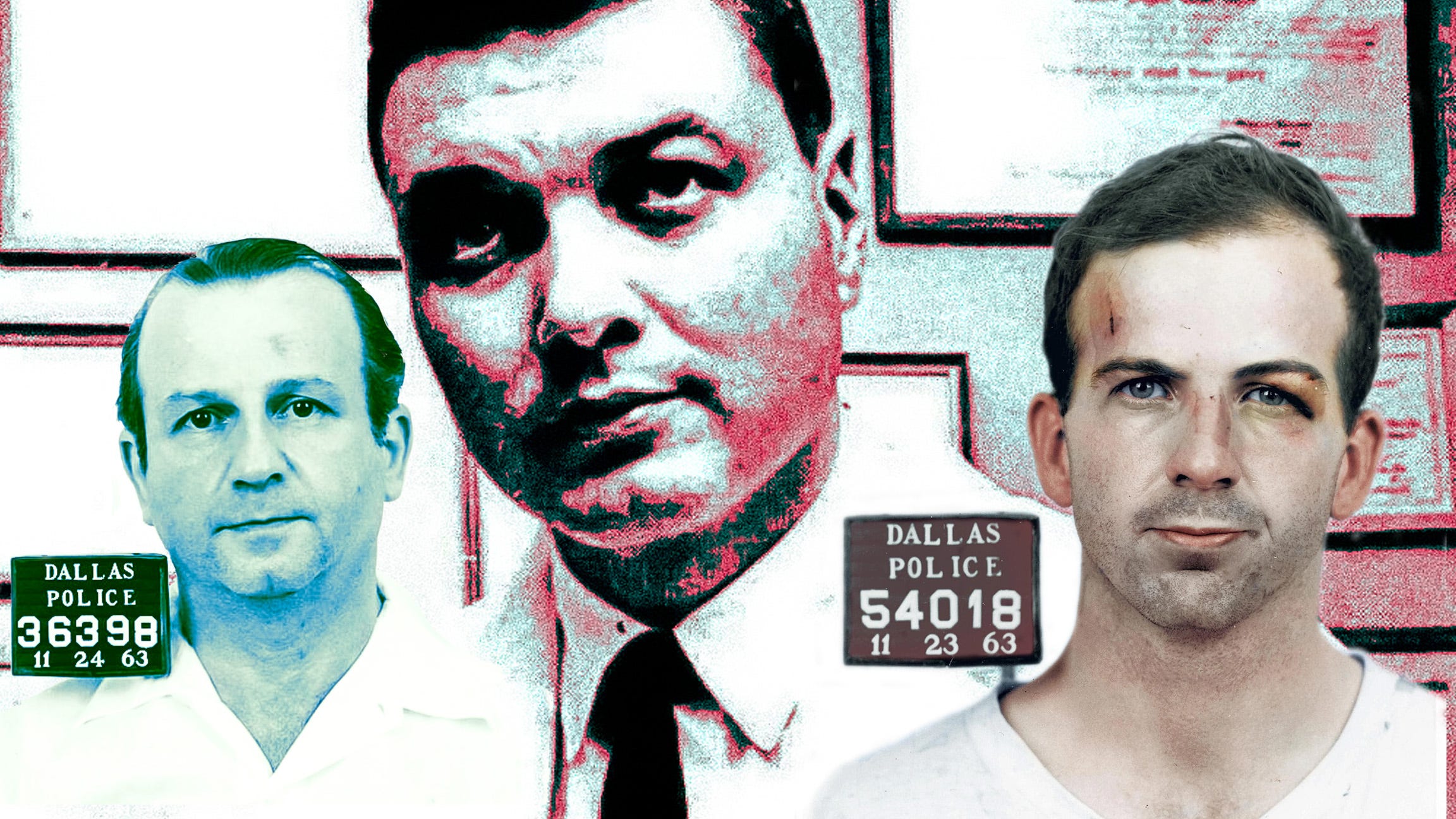
JFK Facts has already recommended the voluminous “JFK: The Enduring Secret” podcast hosted by researcher Jeff Crudele. He recently published his 358th episode. Crudele’s judicious, meticulously detailed accounts of assassination-related topics have never strayed into the realm of recklessly stating theory as fact.
We — as our name suggests — approve of that approach.
Particularly recommended of late: a 28-part miniseries on Jack Ruby, the Mob-linked Dallas nightclub owner who shot Lee Harvey Oswald to death in the basement of a police station on the morning of Nov. 24, 1963, in front of a swarm of cops and reporters, on live television. Crudele has painstakingly detailed Ruby’s life, including his violent temper, physical pugilism, and overall mental instability. It’s a riveting listen. Anyone interested in the story and fate of this tragic bruiser who craved social respectability but died a mysterious, ignominious death in prison should definitely tune in.

What interests us most for now is the final two episodes of that miniseries. These installments concern a psychiatrist, Dr. Louis Jolyon “Jolly” West, and his relationship to the JFK assassination. West, as we’ve reported previously, was contracted by the CIA under its MKULTRA mind-control program in the early 1950s.
He corresponded at length with the director of that program, Dr. Sidney Gottlieb, the head of the Agency’s Technical Services Staff (which became the Technical Services Division) from shortly after the CIA launched MKULTRA in April 1953. Crudele describes Gottlieb accurately as “not a nice man.”
“JFK: The Enduring Secret” breaks down the connection between Ruby and West to show how the already influential psychiatrist gained access to the prisoner alone in his cell in April 1964. Through a fact-based chronology, the podcast dispels a few misconceptions while leaving listeners to ponder the enduring mystery of West’s involvement in Ruby’s trial for the murder of Oswald. West’s ties to Ruby make CIA files about the MKULTRA “assassination-related” under the JFK Records Act of 1992 and President Donald Trump’s Executive Order 14176. We think the public has a right to see them.
West, MKULTRA, and Oswald’s Assassin
In his book “CHAOS: Charles Manson, the CIA, and the Secret History of the Sixties” (2019), investigative reporter Tom O’Neill examines the West-Gottlieb correspondence he discovered among West’s papers at the University of California, Los Angeles. Written communications between the two men began when West was still head of psychiatry at Lackland Air Force Base in Texas, about 14 miles from San Antonio.
In a letter dated June 11, 1953, West laid out a proposal for the research he wanted to do. In short, he suggested a combination of drugs and hypnosis to extract information from reluctant human subjects. West wrote of his ability to induce amnesia. But he also said he could not only alter human memories but actually implant false ones. He could create certain mental disorders as well and was prepared to demonstrate all of this in field trials.
As suitable human subjects for his experiments, West recommended airmen, volunteers, medical patients, and prison inmates. Eventually, West received funding for his research at the University of Oklahoma through the Geschickter Fund for Medical Research, which provided cover as a cutout. The actual source of financial support was the CIA.
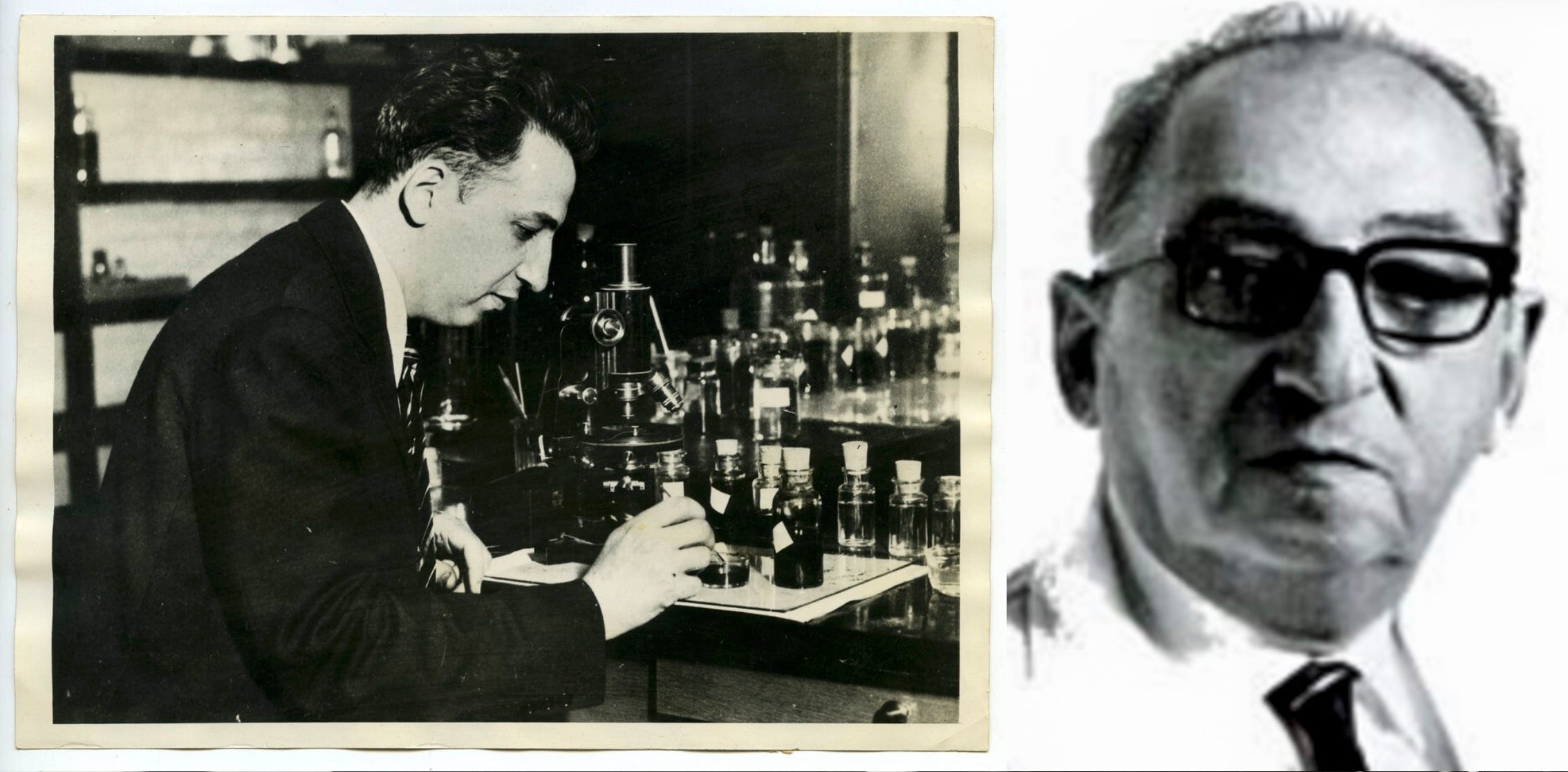
O’Neill testified under oath to Congress about West and MKULTRA in June, as JFK Facts reported. He asserted reasonably that “West inserted himself into the case.” But one reason we don’t know exactly how he did it is that we’ve never seen the CIA’s dossier on the MKULTRA psychiatrist. Secrecy, unsurprisingly, has bred mistrust.

As Crudele explains, O’Neill found “three documents in which West wrote that he had been asked to go and seek the appointment from Judge Brown himself a few days after the assassination.” West didn’t identify the party that asked him to approach Judge Brown in any of the documents, and we still have no idea who that was. But we know he claimed some sort of authority to secure an appointment as an expert medical witness.
While uncertain, it’s a fair conclusion — based on his subsequent behavior — that West was already planning to occupy a spot among the selected troika of doctors. On Nov. 29, 1964, West spoke to The Daily Oklahoman, the main newspaper of Oklahoma City. In the manner of a spokesperson, he told reporters that a team of psychiatrists was offering to help the court, to examine Ruby and serve as expert witnesses for the trial.
Crudele notes West’s explanation of the proposed psychiatric panel to reporters.
“He said the idea had come from a group of medical and legal men in Dallas who wanted to keep the trial from turning into a circus. He named the man heading that group. It was Charles W. Webster, who was a professor of criminal law at Southern Methodist University. Now, West said that Webster had contacted him and asked him to sound out a panel. And he had done it. Jack Ewalt, the president of the American Psychiatric Association, had told West that he would appoint three impartial experts if a Texas court asked for them. At least 10 names in legal psychiatry had already agreed to serve. The plan was that Webster would take it to the court and that Judge Joe B. Brown would pick three off the list.”
West was putting forward the offer proudly, and he had reason to grandstand in front of the press. Since 1954, when he was only 29, West had held the post of chair of psychiatry at the University of Oklahoma, an astounding appointment for a doctor so young. Still, it remains unclear whether Webster or West himself pitched Judge Brown in person. In any event, the judge never took up the offer. The panel idea “simply died”: Judge Brown nixed the proposal for Ruby’s first trial. But West wasn’t done with the case.
Ruby’s city-slicker celebrity defense lawyer, Melvin Belli, staked his entire strategy on the proposition that Ruby had shot Oswald in a moment of “psychomotor epilepsy,” i.e., the debt-plagued nightclub owner had killed the accused assassin during a sudden seizure. That defense failed. Ruby, convicted of first-degree murder in March 1964, was sentenced to death. Ruby’s family then fired Belli and hired Hubert Winston Smith, a Texas lawyer with a medical degree, to represent their kinsman for the appeal.
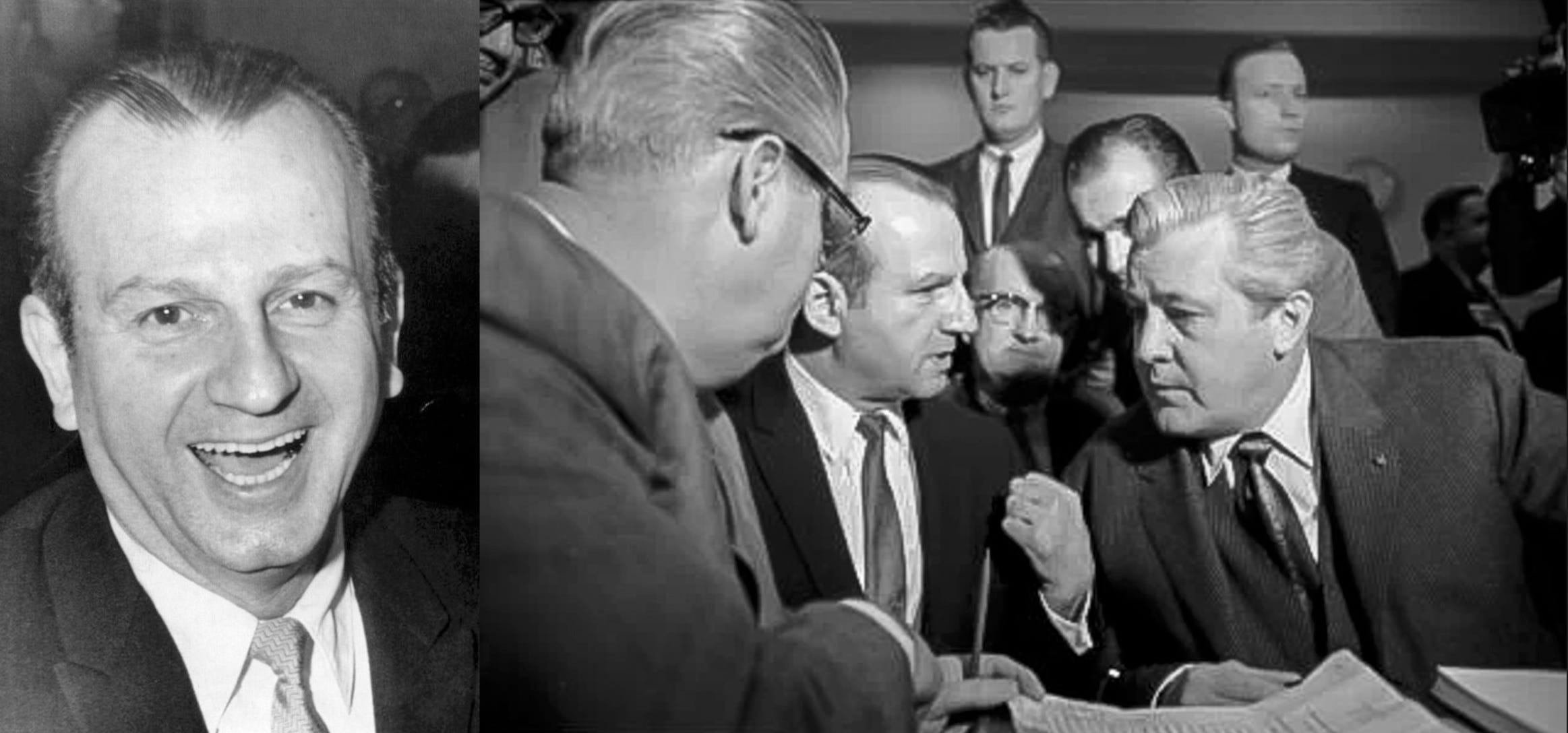
In April 1964, Smith turned specifically to West to come to Dallas and examine Ruby in jail. Smith wanted West to determine “whether further study might recover what was in Jack Ruby’s mind, right at the moment that he shot Lee Harvey Oswald.” According to the public record, it was Smith who suggested the methods for achieving this, namely, hypnosis and sodium pentothal, a barbiturate used as a “truth serum” in interrogations.
What is often overlooked, notes Crudele in the podcast, is that West — at least, if the available documents are to be believed — refused these suggestions. In Crudele’s words:
“Smith wanted West to go into that cell and pull the shooting out of Jack Ruby’s head. And Jolly West said no. Well, at least that’s how it’s portrayed in the documents. He wrote it down in his own report. He said that Ruby was too sick. The man was, in West’s words, obviously psychotic, technically insane. And so, West postponed the whole inquiry. The one man in Dallas who actually knew how to do it was the man who refused to do it.”
The episode features a strange coincidence. Dr. West had earlier secured a teaching position for Smith at the University of Oklahoma. So, when Smith contacted West again several days later to ask him to testify at the trial of America’s most famous prisoner, it almost looked as if Smith was repaying a favor. Since West claimed to have performed the service “without fee,” we are confronted with the question of how much Smith knew of the nature of West’s work at the university on behalf of the CIA. We simply don’t have the files.
West may have served “without fee” from Smith, but did he go to Dallas for no fee at all?
By the time West arrived at the prison at Smith’s invitation on the morning of April 26, 1964, Ruby had already tried to kill himself only hours earlier. On the night of April 25, Ruby “ran headfirst into the wall of his cell,” Crudele explains. “When that did not work, he tried to tear his prison uniform into pieces in order to make a noose.”
Sheriff Bill Decker met West at the Dallas County Jail and told him about Ruby’s suicide attempt the previous evening. West then proceeded up to the sixth floor and entered Ruby’s cell. At first, Ruby was unwilling to be left alone with West, but the doctor wrote that “it was possible gradually over the course of an hour to obtain a reasonable sample of the patient’s mental content.”
He then wrote in his report what he said Ruby had told him about the night before:
Last night the patient became convinced that all the Jews in America were being slaughtered. This was in retaliation against him, Jack Ruby, the Jew who was responsible for “all the trouble.” Somehow, through an awful mistake, and the distortions and mistakes derived from his murder trial, the President’s assassination and its aftermath were now being blamed on him. Thus, he himself was now also the cause of the massacre of “25 million innocent people.” He had seen his own brother tortured, horribly mutilated, castrated, and burned in the street outside the jail; he could still hear the screams. He had seen and heard many other similar horrors. The orders for this terrible “pogrom” must have come from Washington, to permit the police to carry out the mass murders without federal troops being called out or involved.
When West returned for a second visit the next morning, April 27, he remained for an hour and a half, from 8 a.m. to about 9:30 a.m. In other words, West examined Ruby for a total of two and a half hours over two separate days in a jail cell that was supposedly under 24-hour watch. But he was apparently still able to do so alone, out of sight of any witnesses.
Later that day, he confronted a crowd of waiting reporters and dropped “a bombshell announcement.” He claimed Jack Ruby had experienced “an acute psychotic break” over the previous 48 hours, and that the prisoner now had suicidal impulses. West would produce an eight-page affidavit spelling out all Ruby’s symptoms.
In a letter delivered to the Chief Justice Earl Warren in June attaching his report on Ruby, West explained that an examination of Ruby using sodium pentothal or hypnosis would be futile. The prisoner was suffering from terrifying visual and auditory hallucinations. He had a fixed stare and dilated pupils, had tried to hide under his jail bunk during West’s visit, and refused to believe West when he told him none of the things he was imagining were really happening. Ruby even looked like he might lunge at the doctor a few times, West wrote.
Then, as Crudele notes, West wrote a mysterious sentence near the end of his report:
Some material pertinent to his shooting of Oswald was elicited, but is not included in this report.
As Crudele often says: Imagine that.
West secured two sessions with Ruby, discussed the shooting of Oswald, and then omitted it from his report. There is no indication he followed up on this subject later either. It simply was “not included.” Crudele aptly describes this as “one of the most curious moments” of the whole Ruby-West affair. Ruby had told West something about the shooting, yet West — for some reason — didn’t communicate it to the rest of the world. It was “not only in Ruby’s mind, but it was in Jolly West’s” as well, “never to be unlocked.”
In his report of the April 27 session with Ruby, West repeated mention of Oswald and his conscious omission of any details on the subject, even after Ruby talked about it then too:
There was a return of his known previous willingness to discuss the Oswald slaying, and he gave some attention to the progress of his defense, although this interest was still considerably less than usual according to one of his attorneys. While he frequently mentioned Oswald by name last night, today again (as always heretofore) he referred to him only as “the deceased” or “that person.” He reviewed his account of the Oswald slaying, which was consistent with that given during the florid psychotic period last night. This material is not reported here.
Not only is it “not reported here.” It doesn’t appear to be reported anywhere, at least not publicly. West recommended in the report delivered to Earl Warren that Ruby be removed from jail and placed in a psychiatric hospital. In providing his medical counsel, he called for “immediate hospitalization.”
Another psychiatrist — Dr. Robert L. Stubblefield — examined Ruby on April 30, May 1 and May 11, and reached conclusions similar to West’s concerning whether to relocate Ruby to a psychiatric hospital. Stubblefield recommended that Ruby should be moved.
The difference was that Stubblefield was called by Judge Brown. He testified during Ruby’s first trial that the defendant’s condition didn’t meet the legal definition of insanity: Ruby understood the difference between right and wrong and could therefore stand trial.
West was called by defense counsel Smith for the appeal. He hadn’t been able to examine Ruby before his first trial. When he did, in April 1964, he wrote up a report describing Ruby as “technically insane” (not the same as legally insane) and “not now capable of cooperating intelligently in his own defense.”
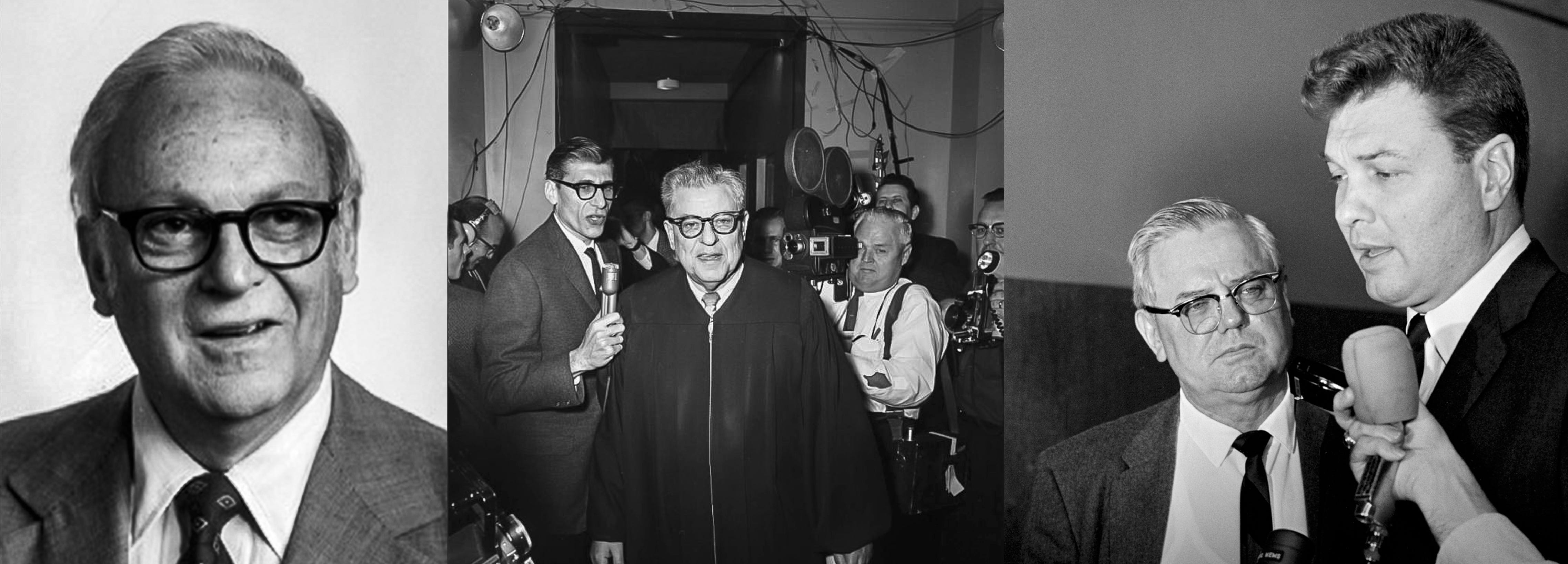
Both Stubblefield’s and West’s reports were completed and delivered to the Warren Commission before the end of May, well in time for Ruby’s interview by Earl Warren in Dallas in July. At that interview, Ruby asked to be taken to Washington to tell everything he knew. Warren refused his plea, and Judge Brown denied the request to transfer him to a psychiatric institution pending his appeal.
West’s CIA Dossier: Possible Clues?
Last year, through the office of Rep. Anna Paulina Luna, JFK Facts secured the “personality file” of Cuban exile and professional hitman Sandalio Herminio Diaz Garcia. Known in CIA parlance as a 201 file, it is opened on “persons of interest,” including contractors who are not formal CIA employees. That’s what Jolly West was.
The Diaz dossier doesn’t reveal a “smoking gun” of conspiracy to murder JFK. What it does reveal are interesting details about the Agency’s interest in a hardened killer, who was allowed to immigrate to the U.S. in summer of 1963 after the CIA had debriefed him.

The dates of documents within Diaz’s 201 file feature a gap from Nov. 8, 1963, to Jan. 23, 1964, so we don’t know Diaz’s whereabouts or activities at the time of the assassination. But the document overall proves informative: We now know CIA counterintelligence chief James Angleton was vetting Diaz as an assassin while he was monitoring Oswald, the man who would ultimately stand accused of killing JFK.
An FBI report from four days after the assassination, not included in Diaz’s 201, shows a Cuban-exile informant telling the FBI that Diaz “is or was working for the CIA.”

Crudele notes with justifiable pessimism that “every record that might have told us who asked Dr. Jolly West to go into that cell and why, well, it was likely burned in 1973 on the orders of the Director of Central Intelligence.” DCI Richard Helms ordered all records on MKULTRA destroyed in January 1973 as he left to take up an ambassadorship in Iran.
The records Crudele refers to might have included the 201 file that the CIA would have opened on West as soon as it contracted him. Unfortunately, unlike with Herminio Diaz, we have no 201 number to go by (Diaz’s was 201-203040). But would the Agency necessarily have shredded such a dossier along with all the operational files?
We don’t know, and to paraphrase Crudele: We’re just sayin’.
But the fact remains that in November 1963, the general public still had no idea that “Jolly” West’s career as a contractor for the CIA already went back about a decade. In fact, no one would know of West’s professional links to the CIA and MKULTRA until the New York Times exposed them and the U.S. Senate launched an inquiry in 1977.
Would West’s CIA dossier fill in any details about his mission to Dallas after the assassination? Maybe. Maybe not. But in our opinion, it’s worth finding out.
Justice for Tusko the Elephant!!!
Who does not believe that Jack Ruby was "MKULTRAd" while he was being held in jail after murdering Lee Harvey Oswald? If it is really true that he became psychotic, that is the reason. Personally, I can't bring myself to believe a single word Dr. West wrote.
Dorothy Kilgallen interviewed Jack Ruby at his trial. She was the only reporter who was allowed to do so, and it was only because Ruby himself requested that he be allowed to speak with her. She did not believe the propaganda that had been disseminated about Ruby's psychosis. All of her voluminous notes for her intended book about the assassination were stolen by spooks / federal agents / Mafia criminals from the house she lived in, a few hours after Ron Pataki murdered her. So we have no idea what Jack Ruby told her, nor anything else she'd researched painstakingly and diligently, and planned to publish.
She was both brave and catastrophically naive. One of her theoretical "friends" was a mafioso by the name of Frank Costello. She naively believed she could be friends with him (and even gladly accept extremely expensive, gaudy diamond jewelry from him) with no repercussions! She ought to have known better. She was too enamored of glamour and celebrity to be able to see that she was being set up for murder by the man the Mafia had sent to honey-pot her. She fell for Ron Pataki hook, line, and sinker, to her untimely, ugly death. Part of the ugliness surrounding her death is her absurd innocence about what was going on. There was no excuse for a seasoned journalist to have been so innocent.